

India’s Fragile Top Order: Live Score & Match Analytics Reveal the Gap


Published 2026-11-07 · By Rajat Kaul (Chief Cricket & Analytics Editor · Chandigarh Desk)
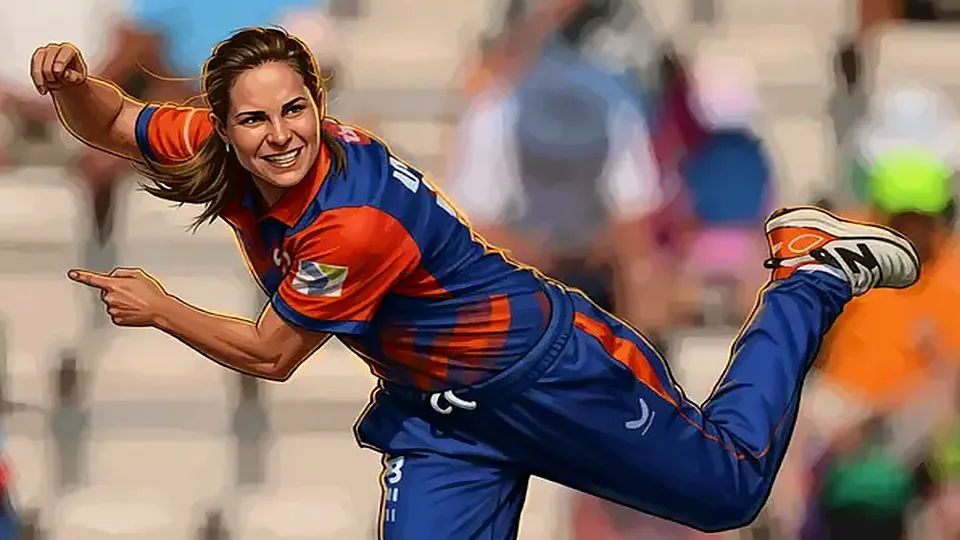
The ball was skidding. It was a typical early-January surface—hard, slightly abrasive, and offering just enough zip to make a cautious opener second-guess his crease. India’s top order didn't just struggle; they looked bewildered. Watching the live score & match analytics on the big screen, the boundary-percentage was a dismal 8% in the first six overs. That is not how you start a series at home.
The Powerplay Paralysis
New Zealand’s opening burst was surgical. They didn't rely on magic; they relied on a disciplined, skiddy hard length that forced the Indian batters to play at balls they should have left. The dressing-room chatter probably sounded like a funeral parlor. Why is the intent missing? Why are we treating a T20 powerplay like a Day 3 Ranji grind?
The numbers don't lie. India’s dot-ball percentage climbed to 52% by the fourth over. In modern T20s, that is essentially a surrender. The Kiwis weren't even bowling missiles—just relentless, nagging lines that strangled the scoring rate. It was a textbook middle-overs choke delivered in the first six.
The Impact Player Gamble
Then came the tactical muddle. The decision to use the Impact Player as a defensive anchor rather than an aggressor felt like a regression. We’ve seen this movie before. Management plays it safe, the momentum shifts, and suddenly the required rate climbs to a mountain that no one in the current lineup knows how to climb.
Consider the mismatch in the data:
| Metric | India (Powerplay) | New Zealand (Powerplay) |
|---|---|---|
| Strike Rate | 104.2 | 148.5 |
| Boundary % | 8% | 22% |
| Dot Ball % | 52% | 31% |
Bowling at the Death
India’s only saving grace was the death bowling. The sliders were hitting the blockhole. The slower-ball bouncers actually worked for once. But you cannot win games if your batters are treating the crease like a minefield. The dew factor after 8:30 PM IST made the ball a soapbar, yet the bowlers managed to squeeze the Kiwis. It was a solitary bright spot in a muddy tactical display.
"We are playing a version of cricket that died in 2019. The game has moved on; our mindset hasn't."
The Red-Soil Reality Check
This wasn't a sticky red-soil track. It wasn't a minefield. It was a fair deck that rewarded bravery and punished hesitation. India chose hesitation. The match analytics show a gaping hole in the 7-12 over bracket—a dead zone where the scoring simply stopped. If the middle order cannot rotate strike against medium pace, the power-hitters at the end are just window dressing.
New Zealand played the conditions. India played the fear of failure. It is a recurring theme in this setup: a reliance on individual brilliance to bail out a flawed systemic approach. One man can win you a game, but a cohesive tactical plan wins you a series.
What Now?
The second T20I arrives in three days. The surface will likely be drier. The heat will be oppressive. But unless there is a fundamental shift in the powerplay philosophy, the result will be the same. Stop the tentative prodding. Stop the obsession with 'settling in'. In T20s, if you spend ten balls settling in, you've already lost the game.
- The Fix: Promote a pinch-hitter at No. 3.
- The Risk: A collapse.
- The Reward: Actually putting the opposition under pressure.
Right now, India is playing not to lose. That is the quickest way to ensure they do.
Related coverage
- Live Score & Match Analytics: Why Starc's No.1 Badge Needs Phase Splits
- Duleep Trophy 2026: The Ranji Grind vs The Modern T20 Hangover

Updated 2026-11-07 · Instant Rupee Deposits & 60s Withdrawals · 24/7 Support.
Access Official ReacSports Portal →Broadcast & Pitch Analyst · Mumbai Desk
Pooja Agarwal reports on franchise leagues, the WPL, and domestic Indian tournaments for ReacSports. Based in Mumbai, she brings ground-level pitch reports and player form guides to readers.
Reader Discussion & Match Reactions (5)4.9★ Community (5 Comments)
Verified Indian cricket reader perspectives & tactical debate on reacjapan.com
On a hard, skiddy surface New Zealand's bowlers hit the same length ball after ball, and India's openers had no release shot — 8% boundaries in the first six overs, 52% dots by the fourth. The Impact Player deployed as a defensive anchor killed any counter-attack; that substitution needed a genuine hitter, not a blocker.
Yaar, 8% boundary rate in the powerplay is not acceptable, not at all — bhai, the Kiwis weren't bowling magic, just nagging hard length, and India's batters played at everything. And that Impact Player call? Playing safe, paisa vasool mentality. That is not a proper knock approach for a home T20 series.
From a fantasy XI angle this collapse kills top-order value: an 8% boundary share and a 52% dot-ball rate by the fourth over mean the Indian openers' points came only from a couple of boundary hits. A powerplay this bad usually forces a batting-order reshuffle, and whoever walks out at No. 3 becomes the punt.
Pitch read: hard, slightly abrasive with enough zip to hold that skiddy length — New Zealand exploited it perfectly, strangling India with relentless lines rather than hunting wickets. Early-January surfaces can still offer dew later, but with the Impact Player used as a blocker, India's middle-over required rate became unbridgeable.
@Harshvardhan_K — agree on the Impact Player call, but the bigger issue was the powerplay plan. India's dot-ball percentage hit 52% by the fourth over against a Kiwis attack simply repeating that skiddy hard length. Add the 8% boundary rate and it wasn't the pitch alone — shot selection and field placement both failed.

